
In a world where food is becoming increasingly processed and adulterated, protecting your
health begins with awareness.
In today’s fast-paced lifestyle, we often focus on eating healthy by choosing fruits,
vegetables, dairy products, and packaged foods that promise better nutrition. However, an
important question remains—are we really eating healthy food?
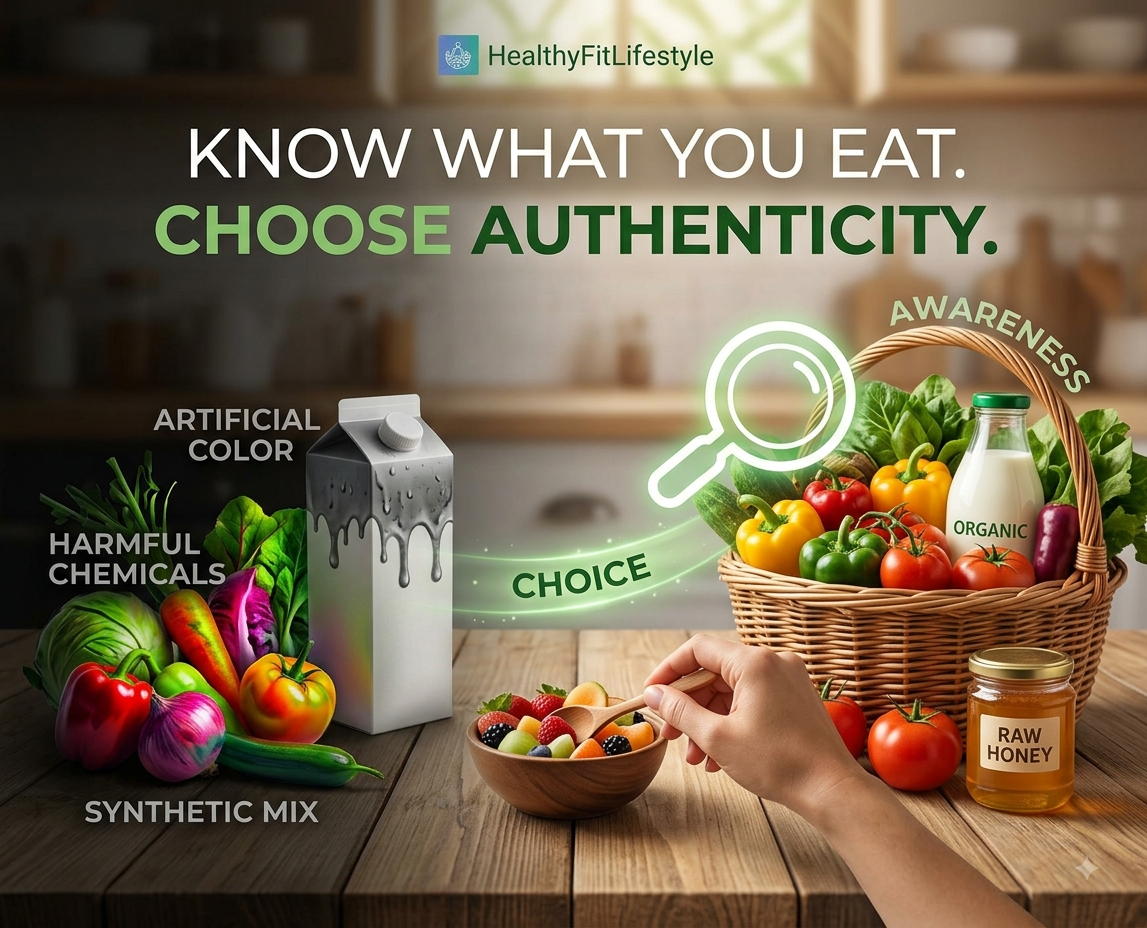
Food adulteration has emerged as one of the biggest public health concerns worldwide. From
vegetables treated with harmful chemicals to milk diluted with water or synthetic substances,
and from artificially ripened fruits to spices mixed with non-food materials, adulteration
silently compromises the quality of the food we consume every day.
At Healthy Fit Life Style, we believe that good health is not just about eating more—it is
about eating safe, nutritious, and authentic food. Understanding food adulteration and
learning how to make informed choices can significantly improve your family’s health and
well-being.
What Is Food Adulteration?
Food adulteration refers to the process of reducing the quality, purity, or nutritional value of
food by intentionally or unintentionally adding inferior or harmful substances. In many cases,
adulteration is carried out to increase profits, improve appearance, extend shelf life, or
increase the weight of food products.
Some common examples include:
Milk diluted with water or mixed with synthetic chemicals
Turmeric and chili powder containing artificial colours
Honey mixed with sugar syrup
Edible oils blended with cheaper alternatives
Fruits artificially ripened using unsafe chemicals
Vegetables containing excessive pesticide residues
Tea leaves mixed with artificial colouring agents
While these practices may make products appear attractive or cheaper, they can pose
significant health risks over time.
Why Should You Be Concerned?
Many adulterants are difficult to identify with the naked eye. Even foods that look fresh,
colourful, or premium may not always be safe.
Consuming adulterated food regularly may lead to:
Food poisoning
Digestive disorders
Allergic reactions
Nutritional deficiencies
Hormonal imbalance
Liver and kidney damage
Weak immune system
Increased risk of chronic diseases
Children, pregnant women, elderly individuals, and people with existing health conditions are
especially vulnerable because their bodies are more sensitive to harmful contaminants.
Why Is Food Adulteration Increasing?
Several factors contribute to the growing problem of adulteration:
Rising Consumer Demand
As populations grow and demand for food increases, producers often face pressure to supply
larger quantities at lower costs.
Profit-Driven Practices
Some unethical businesses add cheaper ingredients or harmful chemicals to maximize profits
without considering consumer health.
Complex Food Supply Chains
Food now travels through multiple suppliers, distributors, warehouses, and retailers before
reaching consumers. This complexity sometimes makes quality control difficult.
Lack of Consumer Awareness
Many people are unaware of common adulteration practices or how to identify suspicious
products, making it easier for dishonest sellers to continue these practices.
Everyday Foods That Require Extra Attention
Although adulteration can occur in almost any food product, consumers should be
particularly cautious when purchasing:
Milk and dairy products
Cooking oils
Honey
Spices
Tea and coffee
Fruits and vegetables
Sweets during festive seasons
Packaged processed foods
Buying from trusted brands and reliable vendors can significantly reduce risks.
Practical Ways to Protect Yourself and Your Family
Fortunately, there are several simple habits that can help you make safer food choices.
- Purchase from Reliable Sources
Choose reputable grocery stores, certified brands, or trusted local farmers whenever possible.
Products with proper packaging and food safety certifications generally offer better quality
assurance. - Read Labels Carefully
Always check:
Manufacturing date
Expiry date
Ingredient list
Nutritional information
Certification marks
Storage instructions
Avoid products with damaged packaging or unclear labeling. - Wash Produce Thoroughly
Wash fruits and vegetables under running water before consumption. This helps remove dirt,
pesticide residues, and surface contaminants. - Prefer Seasonal Produce
Seasonal fruits and vegetables generally require fewer preservation methods and are often
fresher than off-season produce. - Avoid Foods That Look Too Perfect
Extremely shiny apples, unnaturally bright green vegetables, or unusually colourful spices
may not always indicate freshness. Natural foods usually have slight variations in colour and
appearance.
- Cook Fresh Meals at Home
Preparing food at home allows you to control ingredient quality, cooking methods, and
hygiene standards while reducing dependence on highly processed foods. - Stay Informed
Learning about food safety regulations, common adulteration methods, and consumer
awareness campaigns empowers you to make smarter purchasing decisions.
Building Health Beyond Food
Although food safety is essential, true wellness extends beyond the kitchen.
A healthy lifestyle includes:
Eating a balanced diet rich in whole grains, fruits, vegetables, lean proteins, and
healthy fats
Exercising regularly for at least 30 minutes most days of the week
Drinking sufficient water throughout the day
Sleeping 7–8 hours each night
Managing stress through meditation, yoga, or hobbies
Limiting processed foods, sugary drinks, and excessive salt
Scheduling regular health check-ups
Small, consistent improvements often produce better long-term results than short-lived diets
or extreme fitness routines.
Technology Can Help Consumers
Today’s digital tools make informed shopping easier than ever.
Consumers can:
Scan QR codes for product information
Read verified customer reviews
Compare nutritional labels
Follow food safety alerts
Use mobile apps that identify healthier food choices
Technology cannot eliminate adulteration, but it can help consumers make more informed
decisions.
A Shared Responsibility
Ensuring food safety is not solely the responsibility of governments or manufacturers.
Everyone has a role to play.
Consumers should remain vigilant and report suspicious products.
Manufacturers must maintain ethical production standards.
Retailers should source products responsibly.
Authorities should strengthen inspections and enforce food safety regulations.
Healthcare professionals and educators should continue spreading awareness about nutrition
and safe food practices.
Together, these efforts can create a healthier food ecosystem.
In the age of adulteration, maintaining good health requires more than simply eating fruits
and vegetables or following the latest diet trends. It demands awareness, informed decision-
making, and a commitment to choosing safe, high-quality food.
Fortunately, protecting yourself does not require complicated solutions. Buying from trusted
sources, reading labels carefully, preparing meals at home, and staying informed about food
safety can significantly reduce health risks.
Remember, every meal is an opportunity to nourish your body—or unknowingly expose it to
harmful substances. By making thoughtful choices today, you invest in a healthier tomorrow.
At Healthy Fit Life Style, we believe that health is built through knowledge, consistency,
and conscious living. Together, let’s create a future where healthy living begins with safe food
and informed choices.
Because good health isn’t just about what you eat—it’s about knowing what you’re
eating.Than Ever